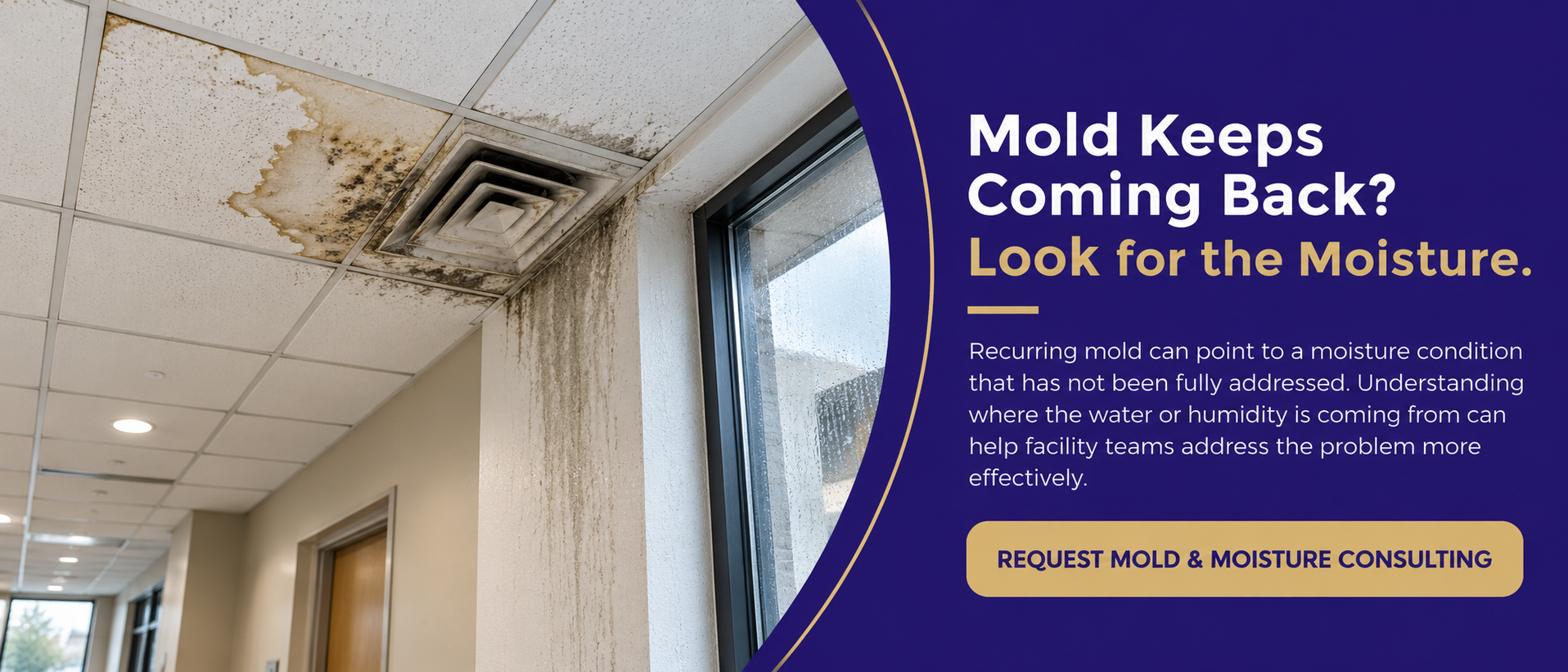
Why does mold keep coming back in Louisiana schools? Learn how moisture, HVAC systems, leaks, and building conditions can cause recurring mold problems.
Learn how hospitals can investigate indoor air quality concerns, identify the source, and address mold, moisture, odors, and HVAC issues with minimal disruption to patient care.
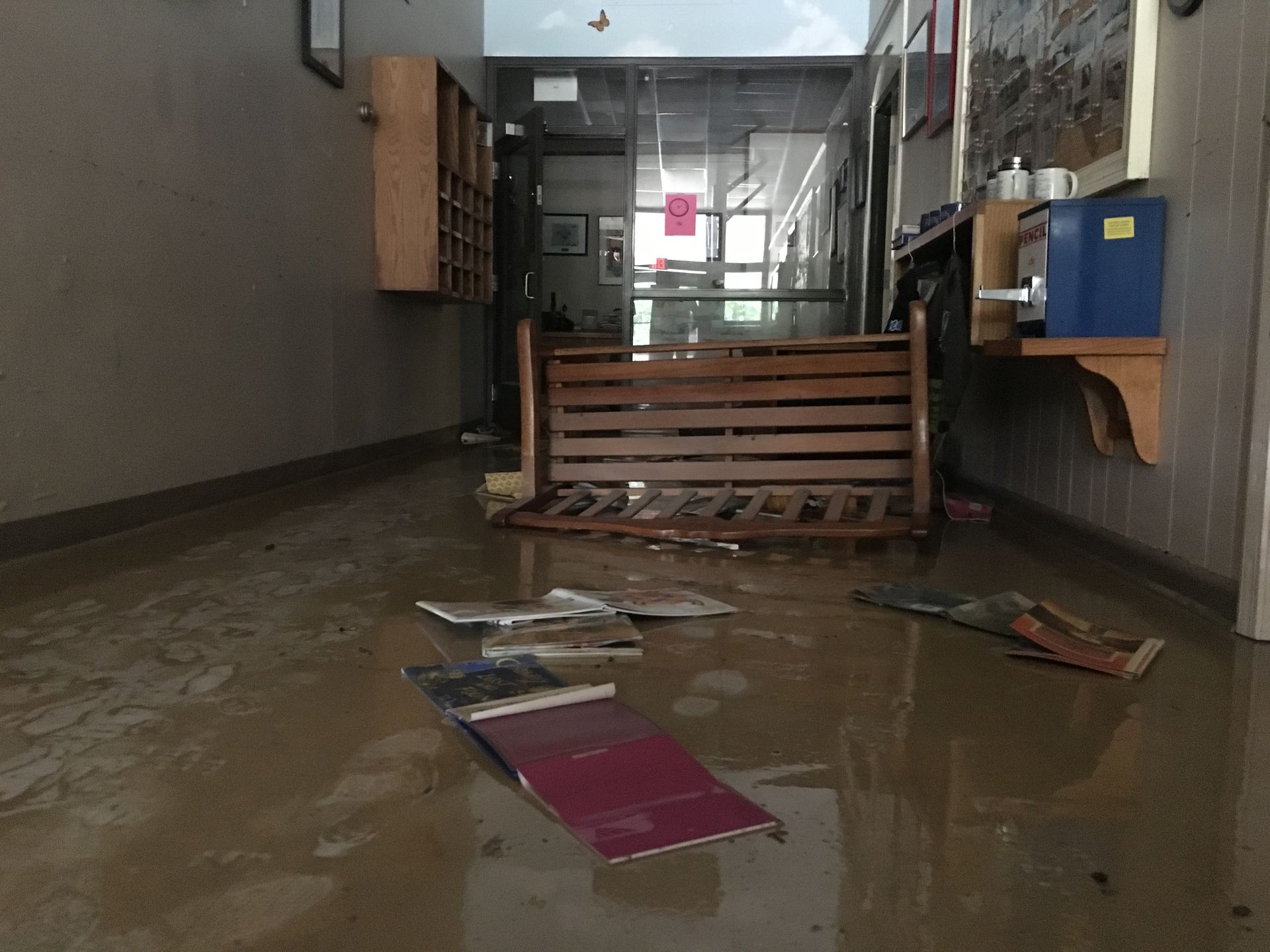
Learn what Louisiana school districts should evaluate for asbestos, mold, moisture, lead paint and indoor air quality before renovating older schools.
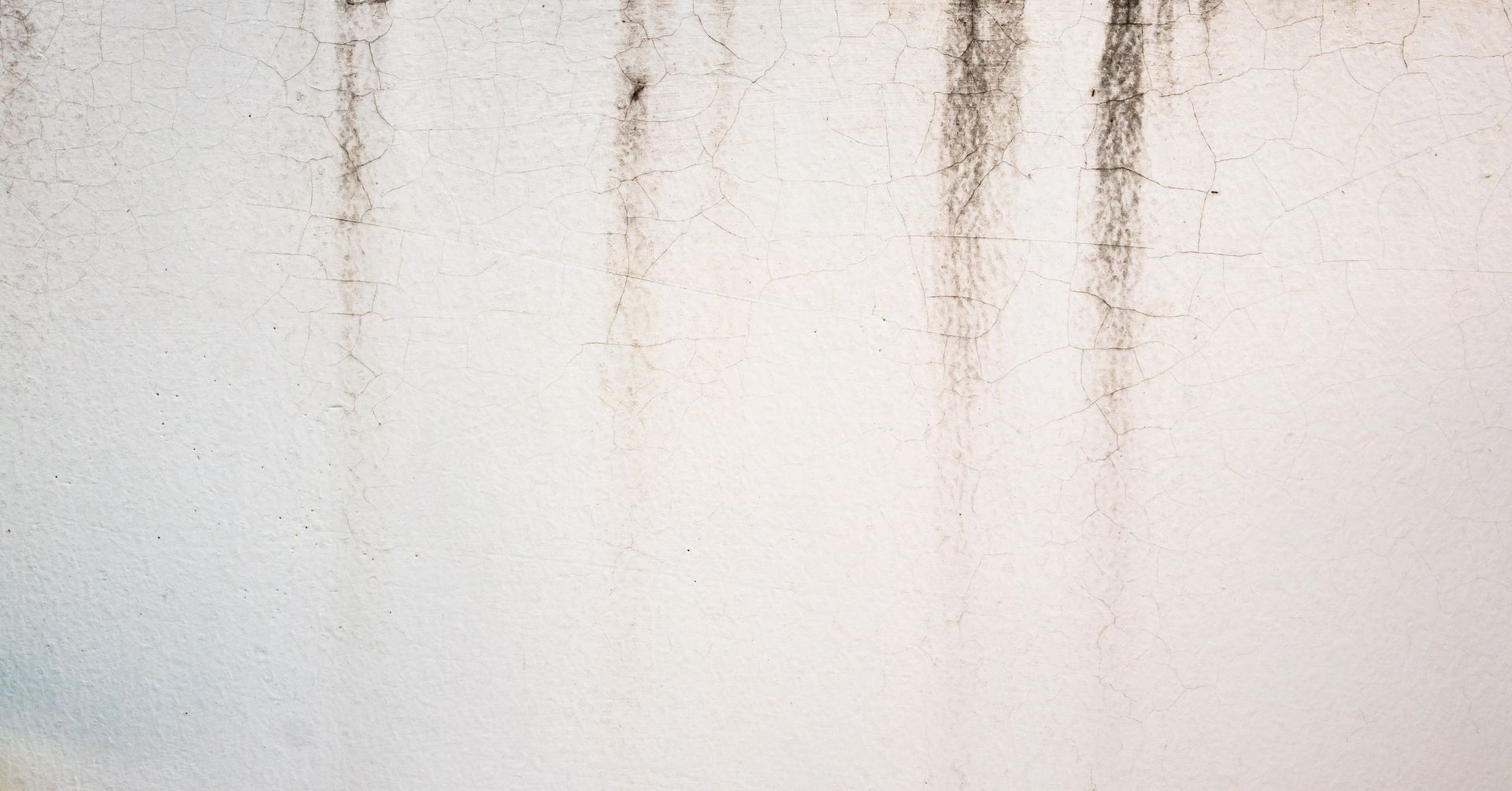
Why do stucco repairs sometimes fail to stop leaks? See how water can enter a commercial wall and what to evaluate before approving another repair.
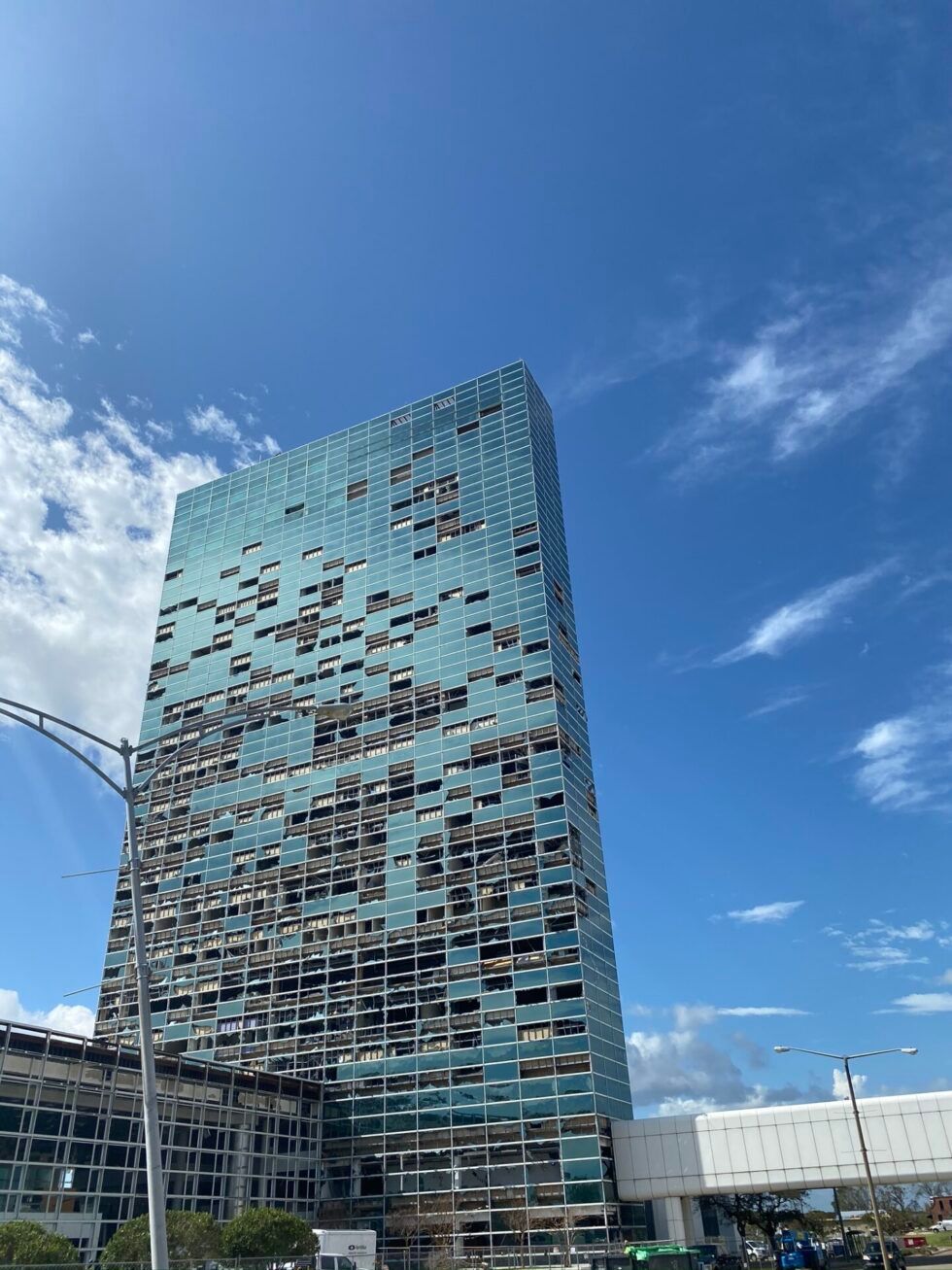
If you’re like me and not in the path of Hurricane Laura, you’ve spent a good bit of time watching Hurricane Laura news coverage. So far it looks like the surge wasn’t nearly as bad as predicted, but Hurricane Laura caused a tremendous amount of damage to Cameron and Calcasieu parishes and the surrounding areas. It’s also too soon to tell how much damage Hurricane Laura will cause as the storm moves inland and dissipates. What’s certain though, is Hurricane Laura will leave a considerable amount of water damage, resulting in water damage restoration and mold remediation. Hurricane Laura environmental cleanup is going to be a huge undertaking and will cause disturbance of asbestos, lead, PCB, and mercury. Proper removal and disposal of those materials is super important. Typically, storm coverage emphasizes water damage and mold remediation. Water damage restoration and mold remediation after Hurricane Laura will be the most obvious cleanup and restoration tasks. But everyone involved with Hurricane Laura environmental cleanup has to consider the other environmental hazards they could encounter. Hurricane Laura environmental cleanup will take time. Response work, particularly environmental cleanup, must balance speediness and caution. This is particularly important since we’ll want to get out right away and assess damage as soon as Hurricane Laura clears out. I know everyone wants to get in and get everything cleaned up and put back together. When we went through Hurricane Gustav (and other storms over the years), I was the same way. But sometimes hasty cleanup efforts can make more of a mess if we don’t slow down and assess all the potential environmental hazards in the work area. We may also put ourselves, co-workers, friends, and family at risk if we unknowingly create an environmental problem. Your safety is the most important consideration. Whether it’s water in the roadways, downed power lines, unstable structures, or contaminated water, make sure it’s safe to move around before you try to get in and assess the damage and environmental hazards. And when the storm is over, we often see hot temperatures return. Dehydration, heat exhaustion, and heat stroke are common problems people face. You’re stressed out and exhausted, and now you’re working in the heat, trying to put your home or business back together. Take care of yourself, then worry about contents – it’s worth repeating that you can always replace buildings and contents, but not people. You can replace buildings and contents, but not people. I won’t get too far into avoiding mold and mold remediation, other than to stress that you need to get the building clean and dry. Maybe Hurricane Laura is the only cause of the mold. Or maybe there’s an ongoing moisture problem that existed before the storm, and now the recovery work has led to discovery of other moisture problems. Find the cause, get the building dried out, cleaned up, and keep the mold from coming back. One other quick reminder on water damage restoration and mold remediation: there is no such thing as a Mold Free Certificate . There’s no requirement to get your home or building certified as “mold free” to make sure you can sell or rent a home or building. Anyone trying to sell you a mold free certificate is trying to scam you. Period.
We have had some questions on cleaning and disinfecting facilities for coronavirus (COVID-19). We have worked to prepare specifications building owners can give contractors to clean and disinfect facilities for coronavirus. In particular, these specifications include cleaning and disinfecting HVAC systems for coronavirus. Obviously, the coronavirus pandemic is unlike anything we’ve experienced. This is not like a flood, hurricane, earthquake, or any other natural disaster we’ve faced. The other virus scares we’ve had in recent years haven’t come close to this. And since coronavirus is invisible and very difficult to detect (at least in comparison to the kind of environmental sampling we typically do), cleaning and disinfecting facilities for coronavirus is not like mold remediation or asbestos abatement. Instead of quickly firing out specifications for cleaning and disinfecting for coronavirus, Wynn and I spent a good bit of time thinking through the process, including surface cleaning and disinfection, HVAC system cleaning and disinfection, and finally, how to verify successful cleaning and disinfection of coronavirus. So it’s taken us some time to get the specifications together. Add to that what we don’t know about coronavirus: how long it can survive on different surfaces and in certain conditions, how temperature and relative humidity affect coronavirus, on and on. We’ve done our best to come up with a thorough cleaning and disinfection specification, but something pretty much any restoration or environmental contractor can execute. Compared to our other specifications, like for mold and asbestos, these specifications are much shorter, while still containing good information to protect the contractor, building occupants, and get the job done. We got to thinking about the places or surfaces where coronavirus could survive, as well as the risk for building occupants from high touch surfaces or ways to spread coronavirus through the air. Surface cleaning and disinfection for coronavirus is obvious. But there could be areas we haven’t yet considered. It got us to thinking about a place or system every building has: the HVAC ductwork and coils. It turns out coronavirus likes cold, wet places. Well, what’s one place that’s cold and wet in our buildings? That’s right – the air conditioner coil, or HVAC system coil. Whatever term you use. When we run our air conditioners, the HVAC coil stays cold and wet. Since coronavirus can get into the air, it can get into the HVAC system, and from there, to the coil. So there’s a ready made spot for coronavirus to survive, even if the building is totally abandoned. Unless we totally abandon a building and shut off the air conditioners, there’s a chance coronavirus could survive past what we think is a safe period. Here’s a quick rundown of what’s included in the specifications, and our thinking for how to go about cleaning and disinfecting facilities for coronavirus: First, the specifications require a thorough cleaning and disinfection of surfaces and materials. No magic here – a thorough cleaning using one of the materials listed with the EPA for cleaning and disinfecting coronavirus . Second, building owners may want to consider cleaning and disinfecting HVAC systems for coronavirus. This includes the ductwork and the coils. For other microbiological contaminants like mold, often duct and coil cleaning is not necessary. There’s also the inconvenient fact that as soon as you open the building and turn the HVAC system back on, mold gets back into the ductwork and rest of the HVAC system since mold is everywhere. So we aren’t against cleaning ductwork and HVAC system coils, but it’s more often than not more related to the Owner’s risk tolerance for mold. Since coronavirus likes cold, wet places, and we are assuming people aren’t going to shut down their HVAC systems for a month, we recommend cleaning and disinfecting ductwork and HVAC coils for coronavirus. If you’re going to spend all that time and money cleaning and disinfecting surfaces and contents, we think it’s a good idea to consider cleaning your ductwork and coils. Third, the specifications cover how workers protect themselves while cleaning and disinfecting for coronavirus. This includes use of protective clothing, gloves, goggles, and respirators. The specifications contain procedures for workers to clean themselves before and after going into the coronavirus cleanup work area. Last, the specifications cover how to conduct testing to verify if the contractor cleaned and disinfected successfully. Unfortunately, there’s no ready-made coronavirus test that is commercially available for environmental testing, at least right now. And rightly so, any commercial lab that can analyze samples for coronavirus is going to be busy analyzing tests for people. So how would we measure success, or at least guess at it? What we’ve settled on for now is a combination of verification used for different facilities such as surgical suites, food preparation, and other public areas. For surfaces, we’re suggesting use of Adenosine Triphosphate (ATP). For HVAC system testing, we’re suggesting using gravimetric testing and analysis. Building owners should decide what criteria they want to set for successful completion. As we get further into this or find other alternatives, we’ll update these recommendations. If you’re interested in more information or would like to get a set of the COVID-19 Cleaning and Disinfection Specifications, click the link below. In case you missed it, here’s a link to the Indoor Environmental Quality Podcast Episode 8 where I cover Ready.gov and OSHA information on coronavirus. If you’d like more information, email me . Or visit our website www.wynnwhite.com or you can find me on Twitter and Instagram: @chriswhitepe The Indoor Environmental Quality Podcast is available in iTunes (if you’re still running the old school iTunes application!), Apple Podcasts app, Google Play, iHeart Radio, and Spotify.