
Respecting Your Elders – Especially When it Comes to Building Science

Chris White • April 13, 2026

Share this article

Respecting Your Elders – Especially When it Comes to Building Science

How many times has someone (usually older than you) told you to respect your elders? Probably more than a few. And if you’re like me, you probably rolled your eyes plenty of times because you were a young know it all who didn’t need any help or the benefit of experience shared by an older person.

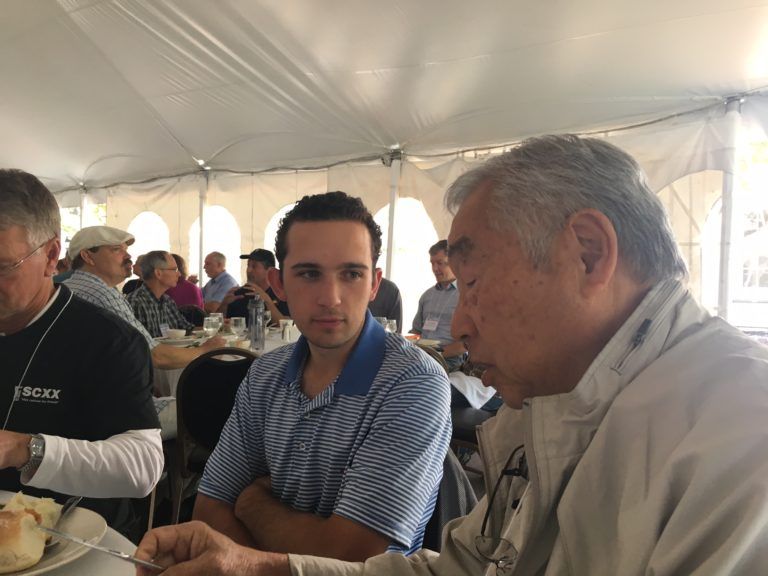
This post got delayed a bit (a lot) because of the Great Flood of 2016, and life in general. I intended to write on this topic after attending the Building Science Corporation Summer camp in Westford, Massachusetts. It was their 20th session, very well attended, which should tell you something. Yes, it’s a working vacation of sorts and a lot of fun, but more importantly, a good chance to be around some very knowledgeable building science professionals.

As I looked at the attendees, one thing that stood out was that there was a considerable amount of building science experience among the group. A lot of the attendees are greatly accomplished, and a lot of them are older. My son and I like to joke about how old people like me know stuff, because he thinks I’m old. I mean, what teenager doesn’t think their parents are old? I’ve noticed that some of my younger colleauges think I’m one of these old guys too.

Anyway, there’s this Heineken beer commercial from a few years ago where a younger guy talks about how he’s improved his golf game by learning from the old guys. If you’ve played golf with older people, they probably score better than you, and if you play for money, they’ll clean you out. Yet somehow they do this without hitting the ball as far as you do, which makes it even more aggravating. How can this be? For one thing, it might result from playing smarter, not harder. My Dad, though, plays golf so much while I’m here at the office doing all the work, so he shoots for a lower score AND outhits me. I threw that in just to see if he reads this.

What is it with me and beer commercials? I don’t know what to say – blame it on watching baseball.

I can hit the ball a long way, most of the time. But I also don’t know where it’s going.

Besides being funny, the commercial raises a good point. Most older professionals are very good at what they do (since they’ve been at it a while!), and often work circles around us younger people when it comes to results. This despite being younger and most of the time having greater abilities with technology. The more experienced people work smarter, not harder. Not exactly profound, I know.

Sadly, younger people, myself included, don’t always take the time to soak up knowledge that our elders offer out of the goodness of their hearts. This post is not about any particular building science tip or trick, or how to avoid mold or any other environmental problem, or construction defects. It’s about appreciating the people around us. Especially the ones that offer help without being asked.

I can name a lot of examples, most obviously my parents and in-laws, but I’ll mention a guy named Ed. Ed’s a lot of fun to be around. He tells funny stories about life in general, but he also has a lot of really good stories about his career. Ed has been there done that, and by all rights could just sit back and watch the rest of us stumble around trying to figure out building science. Instead, Ed and others like him have no problem taking the time to share their wisdom.


By the way, impressive that my younger cousin wanted to attend Summer Camp this summer. When I was 20, I was interested in doing anything other than learning. In summer. Shocking, I know.

Respect your elders, and learn as much building science (and life lessons) as you can from them, and enjoy being around them. One day someone will look up to each of us – not a responsibility to be taken lightly.


Recent Posts

Mold and moisture problem in a Louisiana school building
By Chris White • August 31, 2026
Why does mold keep coming back in Louisiana schools? Learn how moisture, HVAC systems, leaks, and building conditions can cause recurring mold problems.

Indoor Air Quality Testing in a Hospital
By Chris White • August 31, 2026
Learn how hospitals can investigate indoor air quality concerns, identify the source, and address mold, moisture, odors, and HVAC issues with minimal disruption to patient care.
Environmental Engineering Consultants in Louisiana
By Chris White • August 2, 2026
Learn what Louisiana school districts should evaluate for asbestos, mold, moisture, lead paint and indoor air quality before renovating older schools.
By Chris White • July 17, 2026
Learn why mold keeps coming back in commercial buildings and how moisture, HVAC, leaks, and building conditions can contribute to recurring problems.
Water staining below a window on the stucco exterior of a commercial building.
By Chris White • July 14, 2026
Why do stucco repairs sometimes fail to stop leaks? See how water can enter a commercial wall and what to evaluate before approving another repair.
By Chris White • July 14, 2026
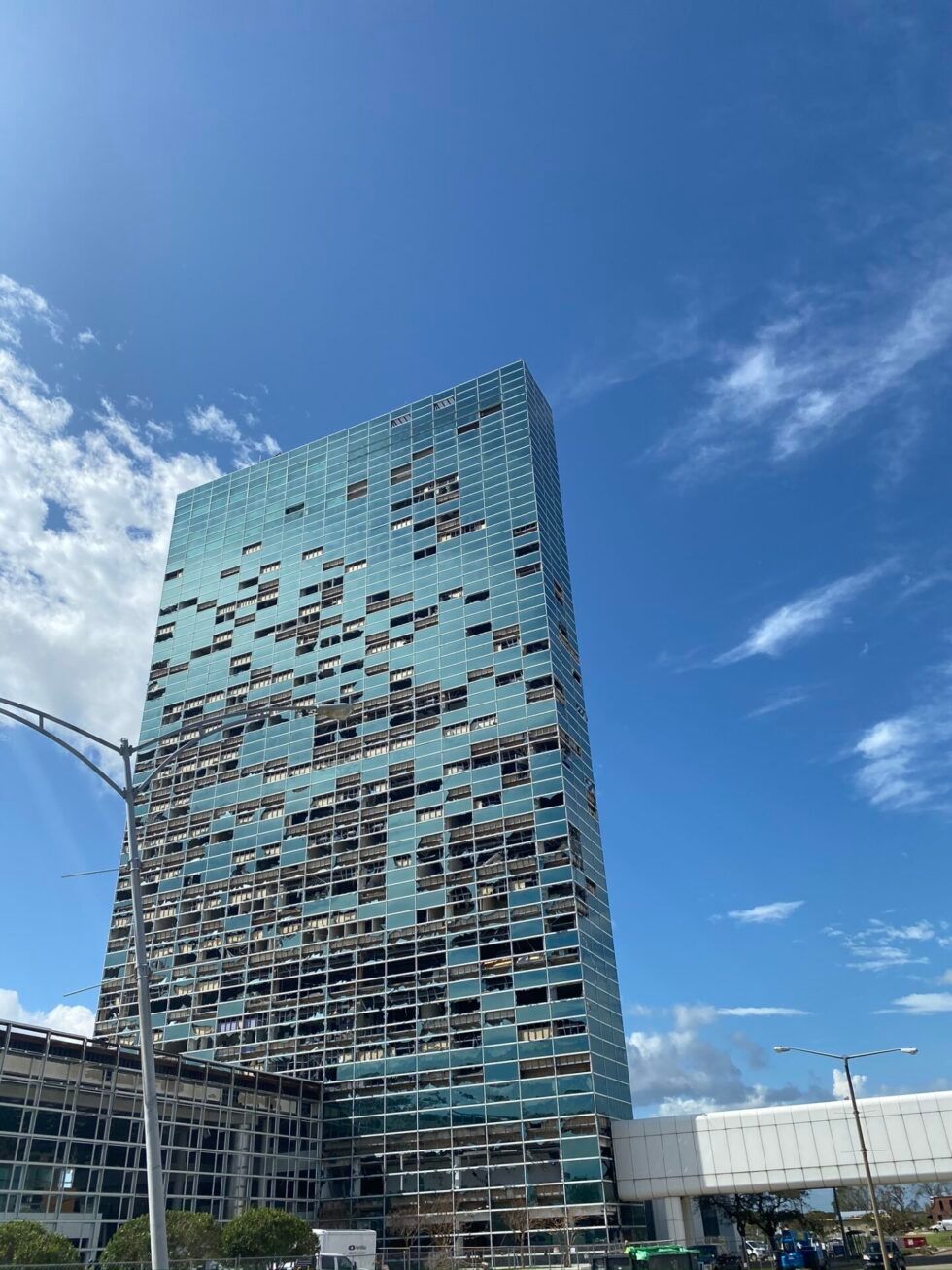
If you’re like me and not in the path of Hurricane Laura, you’ve spent a good bit of time watching Hurricane Laura news coverage. So far it looks like the surge wasn’t nearly as bad as predicted, but Hurricane Laura caused a tremendous amount of damage to Cameron and Calcasieu parishes and the surrounding areas. It’s also too soon to tell how much damage Hurricane Laura will cause as the storm moves inland and dissipates. What’s certain though, is Hurricane Laura will leave a considerable amount of water damage, resulting in water damage restoration and mold remediation. Hurricane Laura environmental cleanup is going to be a huge undertaking and will cause disturbance of asbestos, lead, PCB, and mercury. Proper removal and disposal of those materials is super important. Typically, storm coverage emphasizes water damage and mold remediation. Water damage restoration and mold remediation after Hurricane Laura will be the most obvious cleanup and restoration tasks. But everyone involved with Hurricane Laura environmental cleanup has to consider the other environmental hazards they could encounter. Hurricane Laura environmental cleanup will take time. Response work, particularly environmental cleanup, must balance speediness and caution. This is particularly important since we’ll want to get out right away and assess damage as soon as Hurricane Laura clears out. I know everyone wants to get in and get everything cleaned up and put back together. When we went through Hurricane Gustav (and other storms over the years), I was the same way. But sometimes hasty cleanup efforts can make more of a mess if we don’t slow down and assess all the potential environmental hazards in the work area. We may also put ourselves, co-workers, friends, and family at risk if we unknowingly create an environmental problem. Your safety is the most important consideration. Whether it’s water in the roadways, downed power lines, unstable structures, or contaminated water, make sure it’s safe to move around before you try to get in and assess the damage and environmental hazards. And when the storm is over, we often see hot temperatures return. Dehydration, heat exhaustion, and heat stroke are common problems people face. You’re stressed out and exhausted, and now you’re working in the heat, trying to put your home or business back together. Take care of yourself, then worry about contents – it’s worth repeating that you can always replace buildings and contents, but not people. You can replace buildings and contents, but not people. I won’t get too far into avoiding mold and mold remediation, other than to stress that you need to get the building clean and dry. Maybe Hurricane Laura is the only cause of the mold. Or maybe there’s an ongoing moisture problem that existed before the storm, and now the recovery work has led to discovery of other moisture problems. Find the cause, get the building dried out, cleaned up, and keep the mold from coming back. One other quick reminder on water damage restoration and mold remediation: there is no such thing as a Mold Free Certificate . There’s no requirement to get your home or building certified as “mold free” to make sure you can sell or rent a home or building. Anyone trying to sell you a mold free certificate is trying to scam you. Period. 

Show More