
What Does “Free” Real Estate Cost? An Environmental Site Assessment Can Help You Avoid Problems

Chris White • April 15, 2026

Share this article

If it seems too good to be true, it probably is

In 2003, one of our clients (a municipality) came across a bit of good fortune – a free piece of property in a great location in the commercial business district.

The site was owned by a family that had operated a business there for years, but the business had closed. The building and site sat unused for quite a while.

The building needed to be demolished, but once that was done, a nice property was ready for the City’s use (or sale!).

The City hired a firm to sample for asbestos, knowing demolition couldn’t proceed without a survey. The asbestos survey found no asbestos, and the City found a demolition contractor that would knock down the building and haul it off cheap.

Then the problems started to pile on. The demolition contractor didn’t file the project notification with the Louisiana Department of Environmental Quality (DEQ) – and got caught by a DEQ inspector who just happened to drive by and observe the demolition! Just so you’ll know – in those instances, the Contractor gets a penalty, but so does the Owner!

The DEQ inspector stopped because he knew he hadn’t received project notification for the demolition. What did he find when he went into the building and looked at the debris? You guessed it – suspect asbestos containing materials. He collected samples and sent them to the lab, and found friable asbestos in remaining building materials and in waste/debris from demolition that had just started.


So the job was shut down, and DEQ wrote everyone up. The Owner had tried to do everything right, only to have the “gift” of the free piece of property turn into a migraine headache.

The project was at a difficult juncture, since some of the demolition had taken place, leaving wide open entrances into the building, and friable asbestos debris all over the place. And the site was extremely unsafe – the building wasn’t in the best structural condition, had been weakened by the partial demolition, and now had asbestos all over the place. The Owner’s potential risk was astronomical – what if the site sat abandoned and kids or vagrants got hurt (or worse) while in the building?

Knowing they needed some help satisfying DEQ while being able to finish the project, the City hired us to help. It took some time, but within 90 days we had all the asbestos removed and demolition was complete. And we helped the City avoid further complications with DEQ.

But that “free” piece of property cost the City a cool $250,000. After completing all that work and spending all that money, I’ll bet the overall cost of ownership for that property exceeded the purchase price for a comparable site. In other words, I’ll bet the City went backwards on that deal.

So what went wrong? Here are a few thoughts:

1. No Phase I Environmental Site Assessment (ESA) prior to taking over the site

While a Phase I Environmental Site Assessment wouldn’t have found asbestos in the building, an experienced environmental consultant would likely have pointed out the potential presence of asbestos containing materials. And lead. And polychlorinated biphenyls (PCB). And mercury. You get the drift. By the way, all those materials were present at this site.

2. Incomplete asbestos survey

While the missed asbestos was not the Owner’s fault, the Owner selected the cheapest firm to provide the survey. Although low bid (or low proposal) most of the time wins on public projects, sometimes the taxpayer gets a poorly executed project. No matter what though, guess who owns all the environmental liability?

3. Incompetent demolition contractor

Again, not the Owner’s fault, since the demolition contractor should have known to send project notification to DEQ. However, in selecting a cheap contractor, the Owner paid more in the long run to do the project the right way.

4. Not remembering when Mom and Dad said, “If it seems too good to be true, it probably is.”

Before hiring new employees, there’s generally an interview and some sort of screening process. Real estate transactions are no different – think of this process as a way for you to vet properties before taking on all the environmental liability.

Avoid these problems by selecting a professional engineer to help you assess properties before you take over. Once the site’s yours, you own the good – and the bad.

Stay environmentally savvy, my friends.
Contact me for a free tip sheet with ideas for environmental screening for sites you may be considering for purchase.

Chris White, P.E., LEED AP, CBCP has been helping clients solve problems for 20 years. He is the most interesting engineer in the world, and is a LEED Accredited Professional and Certified Building Commissioning Professional (CBCP). You can follow him on Twitter @ChrisWhitePE.


Recent Posts

Mold and moisture problem in a Louisiana school building
By Chris White August 31, 2026
Why does mold keep coming back in Louisiana schools? Learn how moisture, HVAC systems, leaks, and building conditions can cause recurring mold problems.

Indoor Air Quality Testing in a Hospital
By Chris White August 31, 2026
Learn how hospitals can investigate indoor air quality concerns, identify the source, and address mold, moisture, odors, and HVAC issues with minimal disruption to patient care.
Environmental Engineering Consultants in Louisiana
By Chris White August 2, 2026
Learn what Louisiana school districts should evaluate for asbestos, mold, moisture, lead paint and indoor air quality before renovating older schools.
By Chris White July 17, 2026
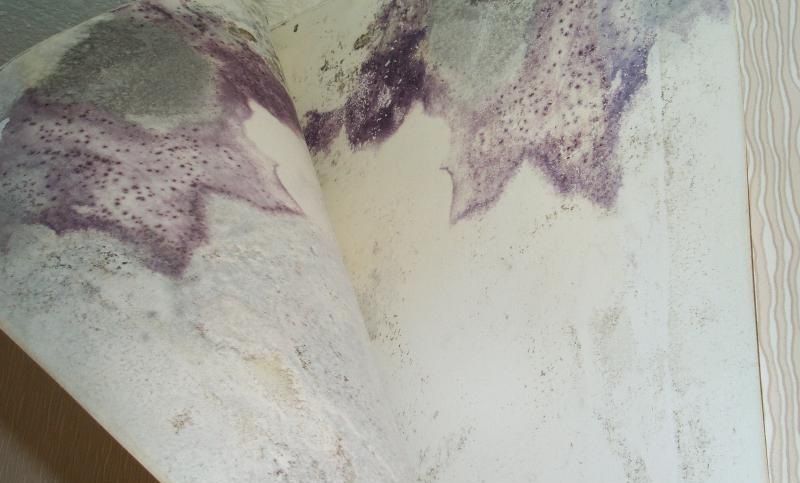
Imagine you’re sitting in your office when you notice a drip-drip-drip. You get the trash can out and put it under the leak-problem solved! Or is it? Does that water touch anything that supports mold growth, like the gypsum board ceiling or your ceiling tile? Do you notice odors after it rains? Do you notice dark fuzzy stuff around the leak or on your air conditioning vents? Mold might not be the end all bad stuff that some folks make it out to be. But if you or someone else notices it-it must be an aggravation at the very least-and it is causing pain of some sort, so let’s stop it, clean it up, and keep it from coming back. Just taking the time to talk about mold is hurting your productivity and there are known health affects of mold-let’s leave that topic for another day. Ten Things You Should Know About Mold: 1. Potential health effects and symptoms associated with mold exposures include allergic reactions, asthma, and other respiratory complaints. 2. There is no practical way to eliminate all mold and mold spores in the indoor environment; the way to control indoor mold growth is to control moisture. 3. If mold is a problem in your building, you must clean up the mold and eliminate sources of moisture. 4. Fix the source of the water problem or leak to prevent mold growth. 5. Reduce indoor humidity to decrease mold growth. 6. Clean and dry any damp or wet building materials and furnishings within 24-48 hours to prevent mold growth. 7. Clean mold off hard surfaces with water and detergent, and dry completely. 8. Prevent condensation. 9. In areas where there is a perpetual moisture problem, do not install carpeting. 10. Did I say stop the moisture? What to do if you have mold: 1. Stop the moisture (and keep it from coming back). 2. Clean up the mold (may require demolition). 3. Develop and implement a proactive moisture management plan. Do you need a professional engineer to design the remediation and repairs? As professional engineers, we are trained to analyze and find the cause of the problem, identify and evaluate the pros and cons of options, and offer you the solution that best fits your goals. This is the basis for design. We, as engineers, spend countless hours searching for options, learning about solutions, investigating products, and trying to understand the available technologies. We have long detailed conversations with experts on subjects like air sealing, water management, egress, health and safety, wind loads, indoor air quality, and structural loads. What to look for if you need professional help: A registered Professional Engineer who has 20 years in the industry and is experienced in solving mold related issues. Look for someone the experts call when they have a question-or when they’re too busy and they want to be sure their clients are taken care of. Someone who has a clear and well defined process that’s going to keep you informed and educated throughout the project so that you know what’s happening throughout each step and you have all the documentation to help eliminate or mitigate any future litigation you may encounter. Leave a comment or question below and I’ll send you a copy of a Proactive Moisture and Mold Management Program that you can use to help you avoid mold problems. Stay moldy, my friends. Chris White, P.E., LEED AP has been helping clients solve problems for 20 years. He is the Most Interesting Engineer in the World. You can follow him on Twitter @ChrisWhitePE .
By Chris White July 14, 2026
Why does stucco leak water into buildings? We get many calls about stucco and water intrusion. I have one friend (he develops buildings) who hates stucco. Why Stucco has been around for a long time. Think of the beautiful stucco structures that are over 100 years old. The stucco was used initially on full masonry walls. It helps shed water and in some cases provided a sacrificial protective service. Really good stuff. So why is it a problem now Well, today it’s used it on materials different from masonry. We put it on steel or wood framing. That’s different but not necessarily the kiss of death. Sometimes what looks like stucco is synthetic stucco or nontraditional stucco (I think of stucco being a three coat system). That’s different as well but not necessarily the kiss of death. Sometimes stucco is considered the sole protective weather barrier—not as an integral part of the cladding system, but as the only protective system. And this is almost always the kiss of death. What should I do if my stucco leaks First, find out where the water is entering the structure. Is it entering through the field of the stucco, at roof to wall connections (think of balconies as a mini-roof), or at openings (windows, doors, cable entrances, etc.)? If water is entering through the field of the stucco, you have a real problem. You’ll probably have to replace all of the stucco. If water is entering roof to wall connections or openings, you can remove the stucco in those areas, properly flash and prepare the openings, and repair the stucco. If you find structural damage because of the water intrusion, you’ll have to replace the damaged materials. What to watch for Well, you bought a stucco cladding system to begin with—how do you know you’ll get a proper system the second go around? That is the $64,000 question. You may not have picked up on it, but I have used the word system throughout the discussion above. Stucco is an important part of the cladding system and it has to be tied in with the water barrier. If you screw up the water barrier, it doesn’t matter what you use for cladding. Note, there are other parts to the cladding system. Stucco is not bad for buildings I like stucco. It is pretty, durable, and nearly maintenance free. But the entire cladding system has to be designed and built properly. If you need help reviewing or designing a cladding system or if you have questions or comments, send me an email. Also, I’d appreciate any photographs you have of failing stucco or of successful stucco repair projects.
By Chris White July 14, 2026
If you’re like me and not in the path of Hurricane Laura, you’ve spent a good bit of time watching Hurricane Laura news coverage. So far it looks like the surge wasn’t nearly as bad as predicted, but Hurricane Laura caused a tremendous amount of damage to Cameron and Calcasieu parishes and the surrounding areas. It’s also too soon to tell how much damage Hurricane Laura will cause as the storm moves inland and dissipates. What’s certain though, is Hurricane Laura will leave a considerable amount of water damage, resulting in water damage restoration and mold remediation. Hurricane Laura environmental cleanup is going to be a huge undertaking and will cause disturbance of asbestos, lead, PCB, and mercury. Proper removal and disposal of those materials is super important. Typically, storm coverage emphasizes water damage and mold remediation. Water damage restoration and mold remediation after Hurricane Laura will be the most obvious cleanup and restoration tasks. But everyone involved with Hurricane Laura environmental cleanup has to consider the other environmental hazards they could encounter. Hurricane Laura environmental cleanup will take time. Response work, particularly environmental cleanup, must balance speediness and caution. This is particularly important since we’ll want to get out right away and assess damage as soon as Hurricane Laura clears out. I know everyone wants to get in and get everything cleaned up and put back together. When we went through Hurricane Gustav (and other storms over the years), I was the same way. But sometimes hasty cleanup efforts can make more of a mess if we don’t slow down and assess all the potential environmental hazards in the work area. We may also put ourselves, co-workers, friends, and family at risk if we unknowingly create an environmental problem. Your safety is the most important consideration. Whether it’s water in the roadways, downed power lines, unstable structures, or contaminated water, make sure it’s safe to move around before you try to get in and assess the damage and environmental hazards. And when the storm is over, we often see hot temperatures return. Dehydration, heat exhaustion, and heat stroke are common problems people face. You’re stressed out and exhausted, and now you’re working in the heat, trying to put your home or business back together. Take care of yourself, then worry about contents – it’s worth repeating that you can always replace buildings and contents, but not people. You can replace buildings and contents, but not people. I won’t get too far into avoiding mold and mold remediation, other than to stress that you need to get the building clean and dry. Maybe Hurricane Laura is the only cause of the mold. Or maybe there’s an ongoing moisture problem that existed before the storm, and now the recovery work has led to discovery of other moisture problems. Find the cause, get the building dried out, cleaned up, and keep the mold from coming back. One other quick reminder on water damage restoration and mold remediation: there is no such thing as a Mold Free Certificate . There’s no requirement to get your home or building certified as “mold free” to make sure you can sell or rent a home or building. Anyone trying to sell you a mold free certificate is trying to scam you. Period. 

Show More