

Preventing Mold & Moisture Problems From Recurring, Costing You Money, & Wasting Your Time

Wynn White • April 29, 2026

Share this article

Prevent Recurring Problems – don’t waste time and money dealing with the same problem over and over again.

Recur is defined as “to occur again, periodically, or repeatedly.” In our mold and moisture work, we see many instances where mold and moisture problems recur. Why is that? As it turns out, there are many reasons. A lot of these reasons have to do with complicated physics – the Second Law of Thermodynamics for example. There are tons of great websites, magazine articles, and books that explain all this in exhaustive detail – I just gave you the short answer.

Practically speaking, the “real” reason is many times much easier to understand. Maybe the building owner thought the problem was fixed and mold and moisture problems wouldn’t happen again. Maybe the previous project solved part of the problem, but there was something else missed, and now it’s causing mold and moisture problems. Maybe there’s not enough money right now.

Often though, we notice that mold and moisture problems are cyclical, almost following the calendar. When the weather starts to warm up, we get more and more calls from building owners having mold and moisture problems.

“Can you come out and look at this?” – so we go out, look at it, take samples, and tell them they do indeed have a mold or moisture problem. Gee thanks, Chris!

“So what do we need to do to clean it up?” – we tell them.

Maybe remediation happens, maybe not. One important question is many times not asked: what caused the problem? Another important question is also left out: what has to happen to keep this from coming back?

Those two questions are what I want to get at. I want to help my client get to the cause AND the real solution. Is it useful to know what type of mold is present? Sure, but it doesn’t stop there. Likewise, the work probably shouldn’t stop when the mold cleanup is finished.

More often than not, our work stops after the mold remediation. Maybe the owner doesn’t want to carry out the time consuming and expensive renovation or HVAC modification necessary to solve the problem. Or maybe repeating remediation is easier than the long term fix. It’s not – we’re just delaying the real fix. But hey, I’ll worry about that next quarter, or next year….

Whatever caused the mold or moisture problem, the remediation phase should also include eliminating the cause – in order to prevent recurrence. In other words, do this once, eliminate recurrence of the mold and moisture problems you’re fighting.

One thing’s for sure, if you have a mold and moisture problem, and you don’t eliminate what caused the mold and moisture problem to occur, the remediation work you’re doing now is only a dress rehearsal for the next time the problem occurs. Be ready to remediate all over again. The good news is you won’t have to call me to come back and take samples, because you’ll already know you have mold.

I know that’s not exactly a revelation, but it happens – a lot. And I know building owners and occupants are frustrated when they keep fighting (and appearing to solve) the same problem over and over again.

So why doesn’t the full solution play out? Sometimes the weather changes and the problem appears to go away. But sometime the problem comes back as soon as the hot, humid times return. And here in Louisiana, that doesn’t take long. Some owners are ok with cleaning up one time, knowing the mold will come back.

Whatever the reason, it’s not much fun to work on the project and not achieve the actual goal – remediating a mold or moisture problem AND keeping the problem from returning. It’s not much fun to be asked, “Why didn’t you get this right the first time?”.

So why this a seasonal thing? Well, one day, our buildings seem to be wringing wet, mold is growing like crazy, and we have to do something. The next thing you know, it cools down, and the mold goes away, or the wet materials seem to dry out.

So the problem’s solved – right? Since that’s the case, we don’t need to do anything else, do we? Well, it depends. If your goal is to get by until you really, really have to clean it up, ok. If your goal is to prevent recurrence, you have to work the problem through to the end.

One thing I’ve yet to mention directly is the case where the owner may have received bad advice from a consultant or contractor. I may have done a great job at determining where the mold is, what kind it is, and how to clean it up – but if I didn’t do a good job of finding the cause and recommending a solution, then the problem won’t get solved on its own.

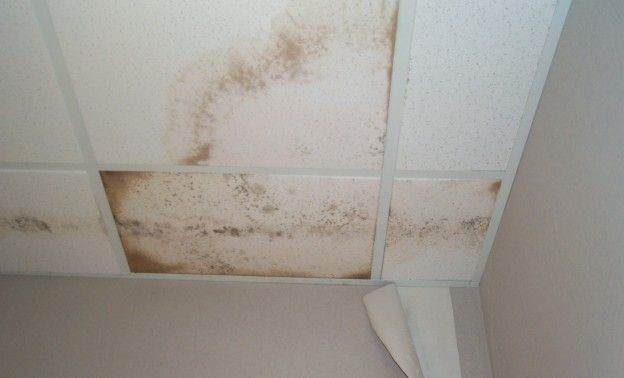
The ceiling shown in the picture below could be materal that’s gotten wet over the last twenty years, and now it’s damaged and has mold. That’s not good, but what if that ceiling was only five or six years old, and this was the second or third time the owner’s had to remediate?


So, if you’re the building owner, what do you do?

If you really want to find the long term solution to a mold or moisture problem, start with hiring good team members. Find someone who’s not going to learn on the job – your job.

Next, communicate clearly what your definition of success is. Many times I may think I know better than my clients – but they’re the customer. Make sure the agreement for services indicates what the scope is.

When you receive your consultant’s report, make sure you know the problem’s cause, and that the report contains clear recommendations moving forward that will allow you to make a business decision. Each stop on the road should indicate how you’ll know the process is moving along successfully.

You’ll be able to decide if you can limp along until your next planned renovation, or you need to act now to mitigate or avoid mold and moisture problems. Otherwise, don’t be surprised if remediation with no actual fix leads to follow up remediation down the road.
Once you’ve decided to solve the problem, keep working until you’re done. Is it that easy? Yes and no. Yes, in the simple sense, but these projects usually involve several time consuming, costly steps. And that’s where some get caught – they stop the process, and the real solution doesn’t get implemented.

Whatever the case, these problems aren’t too big for you (even if the solution seems too big for your budget). With the right approach and the right team, you can really solve these problems and prevent recurrence.

Remember:

You shouldn’t have to remediate mold every few years.

Solve the real problem and you’ll only have to do the job once.

If you don’t solve the problem, the work you’re doing now is a dress rehearsal for next time.

I enjoy working again and again with clients – I’d just rather work on each project ONCE.

What Next?

PICK YOUR CONSULTANT

Select a firm with Registered Professional Engineers on staff

Select a firm with Building Science Experts on staff

Select a firm with Project team members with 20+ years spent helping building owners

Select a firm that other owners, engineers, architects, and contractors call to help solve mold and moisture problems

NEXT STEPS

Decide if you want to solve the problem once and for all.

Get going – the problem won’t get better by itself.

Engage your consultant.

Define your criteria for success.

Get to work finding the cause.

Weigh your options and make a business decision, not a decision based on emotion (apathy or hysteria).

Work the problem (just like Apollo 13).

Keep going until you’ve succeeded.

Stay moldy, my friends.


Recent Posts

Mold and moisture problem in a Louisiana school building
By Chris White • August 31, 2026
Why does mold keep coming back in Louisiana schools? Learn how moisture, HVAC systems, leaks, and building conditions can cause recurring mold problems.

Indoor Air Quality Testing in a Hospital
By Chris White • August 31, 2026
Learn how hospitals can investigate indoor air quality concerns, identify the source, and address mold, moisture, odors, and HVAC issues with minimal disruption to patient care.
Environmental Engineering Consultants in Louisiana
By Chris White • August 2, 2026
Learn what Louisiana school districts should evaluate for asbestos, mold, moisture, lead paint and indoor air quality before renovating older schools.
By Chris White • July 17, 2026
Learn why mold keeps coming back in commercial buildings and how moisture, HVAC, leaks, and building conditions can contribute to recurring problems.
Water staining below a window on the stucco exterior of a commercial building.
By Chris White • July 14, 2026
Why do stucco repairs sometimes fail to stop leaks? See how water can enter a commercial wall and what to evaluate before approving another repair.
By Chris White • July 14, 2026
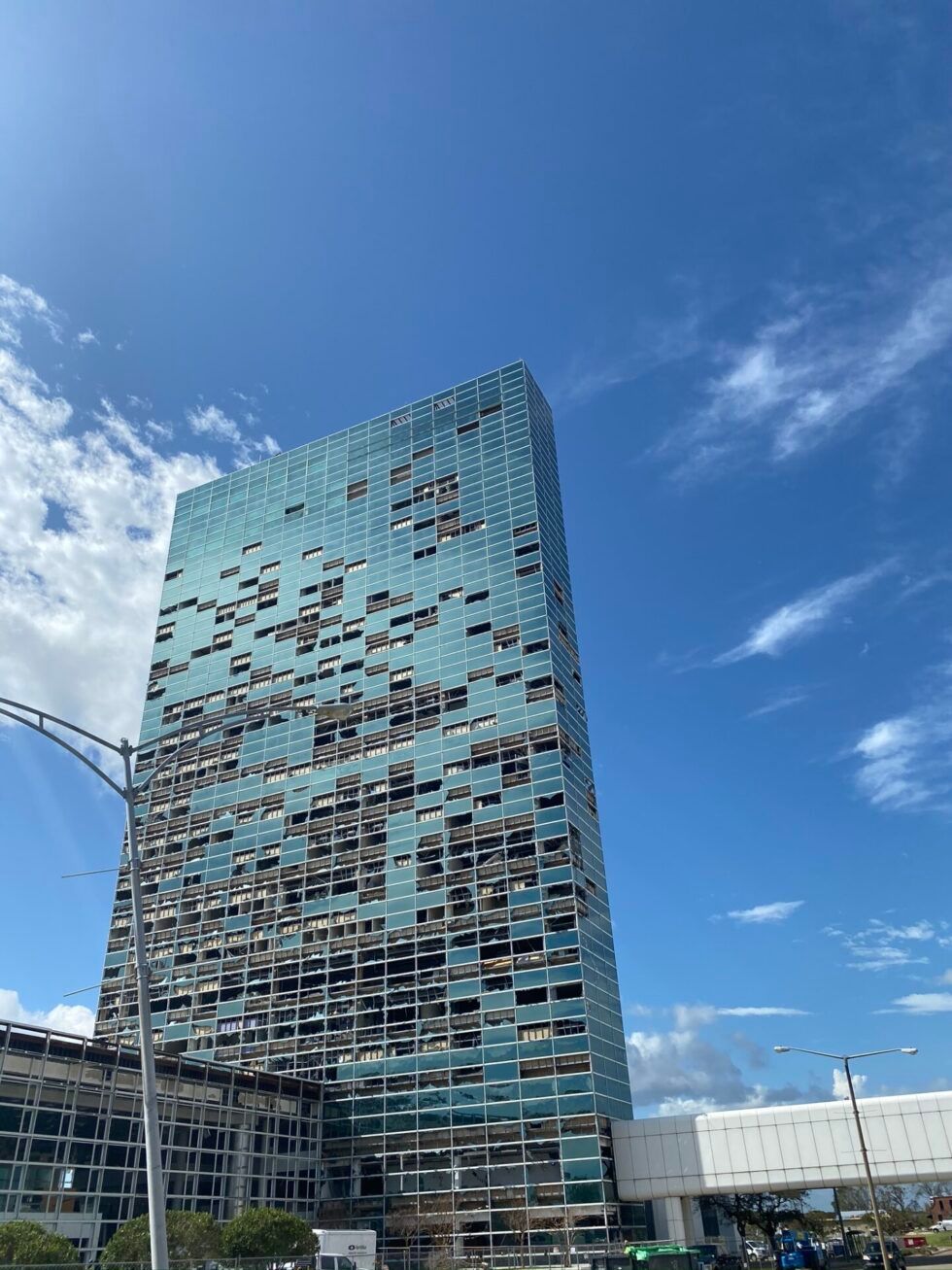
If you’re like me and not in the path of Hurricane Laura, you’ve spent a good bit of time watching Hurricane Laura news coverage. So far it looks like the surge wasn’t nearly as bad as predicted, but Hurricane Laura caused a tremendous amount of damage to Cameron and Calcasieu parishes and the surrounding areas. It’s also too soon to tell how much damage Hurricane Laura will cause as the storm moves inland and dissipates. What’s certain though, is Hurricane Laura will leave a considerable amount of water damage, resulting in water damage restoration and mold remediation. Hurricane Laura environmental cleanup is going to be a huge undertaking and will cause disturbance of asbestos, lead, PCB, and mercury. Proper removal and disposal of those materials is super important. Typically, storm coverage emphasizes water damage and mold remediation. Water damage restoration and mold remediation after Hurricane Laura will be the most obvious cleanup and restoration tasks. But everyone involved with Hurricane Laura environmental cleanup has to consider the other environmental hazards they could encounter. Hurricane Laura environmental cleanup will take time. Response work, particularly environmental cleanup, must balance speediness and caution. This is particularly important since we’ll want to get out right away and assess damage as soon as Hurricane Laura clears out. I know everyone wants to get in and get everything cleaned up and put back together. When we went through Hurricane Gustav (and other storms over the years), I was the same way. But sometimes hasty cleanup efforts can make more of a mess if we don’t slow down and assess all the potential environmental hazards in the work area. We may also put ourselves, co-workers, friends, and family at risk if we unknowingly create an environmental problem. Your safety is the most important consideration. Whether it’s water in the roadways, downed power lines, unstable structures, or contaminated water, make sure it’s safe to move around before you try to get in and assess the damage and environmental hazards. And when the storm is over, we often see hot temperatures return. Dehydration, heat exhaustion, and heat stroke are common problems people face. You’re stressed out and exhausted, and now you’re working in the heat, trying to put your home or business back together. Take care of yourself, then worry about contents – it’s worth repeating that you can always replace buildings and contents, but not people. You can replace buildings and contents, but not people. I won’t get too far into avoiding mold and mold remediation, other than to stress that you need to get the building clean and dry. Maybe Hurricane Laura is the only cause of the mold. Or maybe there’s an ongoing moisture problem that existed before the storm, and now the recovery work has led to discovery of other moisture problems. Find the cause, get the building dried out, cleaned up, and keep the mold from coming back. One other quick reminder on water damage restoration and mold remediation: there is no such thing as a Mold Free Certificate . There’s no requirement to get your home or building certified as “mold free” to make sure you can sell or rent a home or building. Anyone trying to sell you a mold free certificate is trying to scam you. Period. 

Show More